

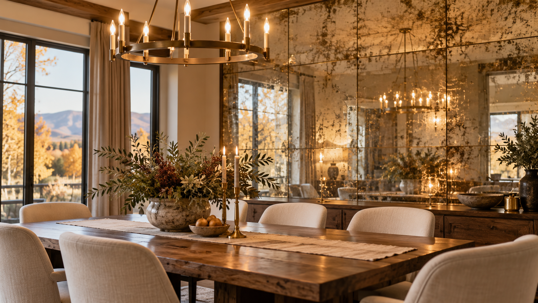
Antique mirror glass is new mirror that has been aged on purpose, so it carries the soft clouding, speckling, and warm tone you'd find on a mirror that has hung in a house for a hundred years. It doesn't reflect like a bathroom mirror. It glows. That's why antique mirrors in Boise and across the Treasure Valley are showing up in places a standard mirror never quite worked, like a dining room accent wall, the back of a home bar, a narrow entry, or the doors of a built-in cabinet.
I'm James Patterson, General Manager at Gatsby Glass of Treasure Valley. I've lived in Boise since 2006, and one thing I've noticed about homes here is that they swing between two kinds of light. Summers are bright and hard. Winters can go gray for days at a time. Antique mirrors handle both well, which is part of why interest in antique mirrors in Boise keeps growing. In this guide I'll explain what antique mirror glass actually is, how it differs from a true antique, where it works best room by room, and what to plan for if you want it installed before holiday guests arrive.
What Antique Mirror Glass Is (and What It Isn't)
When most people picture an antique mirror, they think of an old framed piece found at an estate sale. That's one kind. The kind most homeowners install today is different. It's modern float glass with a mirror coating that has been treated so the silvering breaks down in a controlled way. The result can look lightly misty, heavily veined, or somewhere in between, depending on the finish.
The appeal comes from history. For centuries, mirrors were made very differently than they are now. According to a technical history published by the Williamstown Art Conservation Center, glassmakers on the Venetian island of Murano refined a mercury and tin method for backing glass in the early 1500s, and that technique stayed dominant through the 1800s. A chemical process for depositing silver on glass came along in 1835, and the two methods existed side by side until silvering won out in the early twentieth century.
Both old methods aged in ways people now find beautiful. The same conservation paper notes that aging silvered mirrors take on a warm yellow-brown tarnish, while the older mercury and tin mirrors lean toward a bluish tone and often show speckled spots of lost reflection. Modern antique mirror glass is made to capture those looks without the fragility of the originals.
Why most people choose new aged glass over a true antique
A genuine antique mirror can be a lovely piece of furniture, and if you own one, it deserves care. But for a full wall, a backsplash, or cabinet doors, new antique mirror glass is usually the more practical choice for a few reasons.
Size. Old mirror plates were limited by how glass was made. The Williamstown paper explains that early blown-cylinder plates topped out around four feet by two feet, and even later cast plates reached only about nine by five feet. A modern wall installation can be cut to fit your space.
Consistency. If you want the same finish across several panels or a set of cabinet doors, new glass can be matched in a way that a collection of old mirrors can't.
Stability. Mercury and tin mirrors keep changing over time. Conservators note that the metal layer can continue to break down and that small amounts of liquid mercury can collect along the bottom edge inside the frame. That's a reason to have a conservator, not a glass installer, handle any work on a real antique.
Safety and installation. New antique mirror can be cut, edged, and mounted with modern hardware and adhesives made for mirror, the same way we install any custom mirror.
So when we talk about antique mirrors for Boise homes in this post, we mean new, purpose-aged mirror glass that's cut and installed for your space.
Why Antique Mirrors Suit Treasure Valley Homes
A standard mirror gives you a crisp, exact reflection. That's what you want over a bathroom sink. In a living space, though, a big clear mirror can feel cold or a little too loud, especially when it reflects a busy room back at you. Antique mirror softens the reflection. You still get light and depth, but the image blurs slightly and picks up a warm or smoky tone, so it reads more like a finish than a fixture.
That matters here because of our light. Treasure Valley summers are bright, and west-facing rooms in newer homes out in Kuna and Star can get a lot of late sun. A clear mirror on the wrong wall can bounce glare right across the room. Antique mirror scatters that light more gently.
Winter is the other half of the story. Anyone who has spent a January in Boise knows the gray stretches when the valley fills with cold air and fog. A meteorologist with the National Weather Service in Boise told Boise State Public Radio that inversions happen more in winter because dense cold air flows downhill and settles at lower elevations, and that they usually stop lingering for days once the sun climbs higher in mid to late February. During those months, any surface that pulls in and spreads light helps a room feel less closed in. Antique mirror does that while still looking warm, which is a nice balance for a dark afternoon.
It also fits the range of homes we see. Older houses on the Bench and near downtown often have traditional trim and plaster walls where an aged finish looks like it has always been there. Newer builds in Meridian, Eagle, and Harris Ranch tend to have open plans and neutral palettes, and a panel of antique mirror adds character without fighting the clean lines.
Where Antique Mirrors Work Best, Room by Room
The question we hear most is simple. Where should it go? Here are the places antique mirror glass tends to look best, along with what to think about in each one.
Dining room accent walls
This is the classic spot. A full or partial wall of antique mirror behind a dining table or sideboard picks up candlelight and pendant light and reflects the room in a soft, flattering way. It makes a dining room feel larger without the sense that you're eating in front of a dressing room mirror. Many homeowners run panels from the chair rail up, or frame a section between two windows.
If you host holiday dinners, this is the upgrade guests notice first. It's also one of the easiest to plan, since dining room walls usually have fewer outlets, switches, and plumbing to work around.
Home bars and wine areas
Antique mirror behind open shelving at a home bar is a look that goes back to old hotel lounges and speakeasies, and it still works. Glassware and bottles reflect in the aged surface and seem to glow, especially with under-shelf lighting. If you're planning a larger wine storage project, the same finish can be used as an accent near a glass wine room or enclosure, such as on the wall behind racking or on a nearby bar back.
For wet bars, plan for splashes. Mirror behind a bar sink should be sealed at the edges, and it's worth keeping a small gap or a backsplash strip between the mirror and the countertop so water doesn't sit against the bottom edge.
Entryways and narrow halls
Entries in a lot of Treasure Valley homes are small, and they're often the darkest part of the house in winter. A tall panel of antique mirror or a framed piece across from the front door makes the space feel wider and brighter without the full reflection of a standard mirror, which can be a little startling when you walk in. It's also a practical spot for a last look before heading out to the Foothills trails or across town.
Cabinet doors and built-ins
Antique mirror inserts in upper kitchen cabinets, a butler's pantry, a dining hutch, or a bedroom wardrobe are a subtle way to use the finish. The mirror hides the contents a little better than clear glass would while still adding depth. This works well when you want character without committing a whole wall.
Fireplace surrounds and mantels
An overmantel mirror is one of the oldest uses for mirror in a home, and antique glass gives it an especially natural look. Leave clearance from the firebox and follow your fireplace manufacturer's guidance for materials near the opening. Mirror is usually installed above the mantel rather than right against the firebox face.
Kitchen backsplashes
Antique mirror backsplashes have become popular, and they can be striking. They also need the most planning. Behind a sink, water and cleaning products are the main concern. Behind a cooktop, heat and grease are. Many homeowners use antique mirror on a run of backsplash away from the range and choose another material directly behind the burners. We'll talk through the specifics of your layout during a consultation.
Bathrooms and powder rooms
A powder room is a great place to try antique mirror. There's no shower, so humidity stays low, and the space is small enough that a single wall of aged glass makes a big impression. In full bathrooms, it's still possible, but ventilation matters more. Mirror coatings are most vulnerable at the edges, and constant moisture can speed up breakdown of the backing. The U.S. Environmental Protection Agency recommends running the bathroom fan or opening a window when showering and keeping indoor humidity below 60 percent, ideally between 30 and 50 percent. Those same habits help any mirror last longer. If you want a crisp reflection for everyday grooming, you can pair a clear vanity mirror with antique mirror on a side wall or behind open shelving. Our glass shower team can help plan the whole bathroom so the glass pieces work together.
Choosing an Antique Mirror Finish
Antique mirror isn't one look. The finish you choose changes how the room feels, so it's worth seeing samples in your own light before deciding. Here are the main things to compare.
Level of aging
Some finishes are barely distressed, with light misting around the edges and a mostly clear center. Others are heavily veined or spotted across the whole surface. Light aging works well where you still want to see a usable reflection, like an entry. Heavier aging reads more like a decorative wall finish and is great for bar backs and accent walls where reflection isn't the point.
Tone and tint
Antique mirror can be made on clear glass or on tinted glass such as gray or bronze, and the aging itself can lean warm or cool. Warm, golden tones pair well with wood, brass, and cream walls. Cooler, smoky tones fit modern gray palettes, black hardware, and stone. Ask to see a few options side by side.
Pattern
Veining patterns range from cloudy and organic to more speckled and even. Some homeowners like a consistent pattern across all panels, and others prefer each piece to look a little different, like a real old mirror would. Neither is wrong, but it's good to decide up front so the finished wall matches what you pictured.
Panels or one piece
Larger walls are often done in panels. Panels can be laid out in a grid, in tall vertical strips, or in a brick pattern, and the joints become part of the design. A single large piece gives an uninterrupted look but depends on wall size, access into the home, and how the glass can be carried and set. We'll recommend what makes sense for your space.
Edges and framing
Edge work changes the finished look. A beveled edge adds a traditional frame of light around each panel. A flat polished edge is cleaner and more modern. For a framed piece over a mantel or console, the frame and the mirror finish should be chosen together.
How We Install Antique Mirrors in Boise Homes
Every antique mirror project we do follows the same basic path as our other custom mirror installations. It starts with a free in-home design consultation. We look at the wall or cabinet you have in mind, check how the light moves through the room during the day, and talk through the finishes and layout that fit your style. Antique mirror glass can be hard to track down in the Treasure Valley, which is one reason our team keeps a good supply on hand for local projects.
From there, we take precise measurements. Walls are rarely perfectly flat or square, especially in older Boise homes, so measurements account for outlets, switches, trim, and any out-of-plumb corners. The glass is then cut and edged to fit.
On install day, our team prepares the wall, sets the mirror using mounting methods and adhesives made for mirror, and checks alignment across panels so joints line up cleanly. Outlet and switch cutouts are handled during fabrication so the finished wall looks intentional. When we're done, we walk you through care so the finish looks right for years.
Planning Your Antique Mirror Project Before the Holidays
October is a good month to start. Holiday entertaining season is when accent mirrors and statement walls get noticed, and dining rooms, entries, and home bars get more use from Thanksgiving through New Year's than at almost any other time.
Because antique mirror is custom cut for each space, there's lead time between your consultation and install day. If you want the work done before guests arrive, it helps to book your consultation early in the fall and ask about current scheduling when we visit. A few things make the process go faster.
Know the wall. Take a photo of the space and note what's on or near it, like outlets, light switches, trim, or a thermostat.
Collect a few ideas. Screenshots of finishes and rooms you like help us narrow the options quickly. Our inspiration gallery is a good place to start.
Think about light. Notice how the room looks in the morning, late afternoon, and at night with lamps on. That helps us suggest the right tone.
Plan around other work. If you're painting, changing light fixtures, or replacing a countertop, those usually happen before the mirror goes in.
Caring for Antique Mirror Glass
Antique mirror is easy to live with once it's installed, but a little care goes a long way, especially along the edges where the backing is most exposed.
Clean gently. Use a soft microfiber cloth and a mild, ammonia-free glass cleaner or plain water. Spray the cloth rather than the mirror so liquid doesn't run down and collect at the bottom edge.
Skip harsh chemicals. Abrasive pads and strong cleaners can damage the surface or work their way into the edges over time.
Watch the humidity. In bathrooms, run the fan during and after showers. In the rest of the house, Boise's dry air is actually kind to mirror finishes.
Keep water off the bottom edge. At bars and backsplashes, wipe up splashes rather than letting them sit where mirror meets countertop.
The aging on antique mirror is part of the design, so you don't need to worry that light spots or veining are flaws. If you ever notice new dark spots spreading from an edge, that's a sign moisture is getting behind the backing, and it's worth having us take a look.
How to Choose a Company for Antique Mirrors in Boise
Antique mirror looks simple once it's on the wall, but getting there takes careful measuring, clean cutting, and a good eye for layout. When you're comparing glass companies, a few questions will tell you a lot.
Can they show you real samples? Finish photos online rarely match what you see in person. Ask to see samples in your own room.
Do they measure on site? Custom mirror should be measured by the installer, not from a homeowner's tape measurement.
How do they handle outlets, trim, and uneven walls? A good answer includes specifics, not just "we'll make it work."
What mounting method will they use? Mirror should be installed with materials made for mirror, since some general adhesives can damage the backing.
Will they advise on placement? The right company will tell you when a spot isn't a good fit, such as directly behind a range, and suggest an alternative.
At Gatsby Glass of Treasure Valley, we design and install custom mirrors for homes across Boise, Meridian, Eagle, Nampa, Kuna, and Star, and antique mirror is one of the finishes we're most excited to work with right now.
Frequently Asked Questions About Antique Mirrors in Boise
What is antique mirror glass?
Antique mirror glass is new mirror that has been treated so its reflective backing looks aged, with clouding, veining, or speckling. It gives the look of a centuries-old mirror while being cut and installed like any modern custom mirror.
Is antique mirror the same as a vintage mirror?
No. A vintage or true antique mirror is an old piece that has aged naturally over decades. Antique mirror glass is newly made and aged on purpose, which allows larger sizes, matching panels, and installation on walls, backsplashes, and cabinet doors.
Can antique mirrors go in a bathroom?
Yes, with good ventilation. Powder rooms are an easy fit because humidity stays low. In full bathrooms, running the exhaust fan during and after showers helps protect the edges of any mirror. Many homeowners pair a clear vanity mirror with antique mirror on another wall.
Can you see yourself in an antique mirror?
It depends on the finish. Lightly aged antique mirror still gives a usable, softened reflection. Heavily aged finishes act more like a decorative surface, reflecting light and color more than a clear image.
How far ahead should I plan antique mirrors for the holidays in Boise?
Plan early in the fall. Antique mirror is custom cut for each space, so there's lead time between measuring and installation. Booking a consultation in October gives you the best chance of having it installed before holiday guests arrive.
Where does antique mirror look best?
Dining room accent walls, home bars, entryways, cabinet doors, and above fireplace mantels are the most popular spots. Kitchen backsplashes can work too, with careful planning around sinks and cooktops.
Bring the Warmth of Antique Mirror Into Your Home
If you've been thinking about a statement wall, a bar back that glows, or just a brighter entry for the gray months ahead, antique mirror is worth a look. We'd be glad to come out, see your space, and show you finishes in your own light. Contact Gatsby Glass of Treasure Valley to schedule a free design consultation, or call (208) 427-2296. You can also explore more of what we do on the Gatsby Glass of Treasure Valley homepage.