

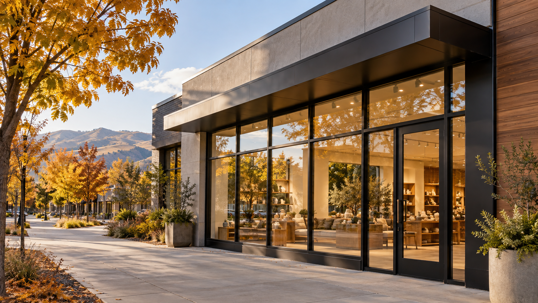
If your storefront glass is foggy, cracked, drafty, or just looks tired, the most useful thing to know before replacing it is this. Aluminum storefront glass is a system, and the frame, the glass, the door, and the installation all have to work together. Replacing only the part you can see may fix today's problem, but a smart replacement looks at the whole opening so you only pay for it once.
I'm James Patterson, General Manager at Gatsby Glass of Treasure Valley. I've called Boise home since 2006, and before joining Gatsby Glass I ran a local business here for ten years. I know what it feels like to stand outside your own shop and wonder whether the front of the building is helping or hurting you. This guide covers what business owners in Boise, Meridian, Nampa, Eagle, and the rest of the Treasure Valley should understand about aluminum storefront glass before they replace it, and why early fall is a good time to get the project on the calendar.
Why Fall Is the Right Time to Replace Aluminum Storefront Glass in Boise
September and October give Treasure Valley businesses a practical window. The worst of the summer heat has passed, and the hard freezes and winter inversions have not arrived yet. Glazing work, sealants, and door adjustments are all easier to do well in mild, dry weather.
Timing matters for another reason. Holiday shopping traffic starts building in November, and your storefront is the first thing customers see. A fogged insulated unit, a scratched door lite, or a door that drags and won't latch is not the impression you want to give during the busiest stretch of the year. Custom glass is cut and fabricated to fit your opening, so starting the conversation now leaves room for measuring, ordering, and installing before the rush.
Winter also exposes storefront weaknesses. Boise's cold snaps show you exactly where warm air leaks out and cold air creeps in. If your front entry already felt drafty last January, this fall is the time to address it rather than waiting through another season of it.
What Aluminum Storefront Glass Actually Is
When people say "storefront," they usually mean the ground-floor wall of glass and metal framing that faces the street or parking lot. In most commercial buildings, that framing is extruded aluminum. The aluminum pieces create a grid of vertical members (mullions) and horizontal members (rails), and the glass panels, called lites, sit inside that grid.
Aluminum became the standard for good reasons. It is strong for its weight, it doesn't rot or warp, it can be finished in several colors, and it allows large areas of glass with slim sightlines. That's why you see aluminum storefronts everywhere from Downtown Boise and the West End to strip centers along Fairview Avenue and newer retail pads in Meridian and Nampa.
A typical aluminum storefront system includes a few main parts.
The frame. Aluminum head, sill, jambs, and mullions that hold the glass and carry wind loads back to the building.
The glass. Either a single layer of glass or a sealed insulating glass unit with two panes and an air or gas space between them.
Glazing materials. Gaskets, setting blocks, and sealants that hold the glass in place and keep water out.
The entrance. One or more aluminum doors with their own hardware, closers, and thresholds.
Perimeter sealant. The joint between the storefront frame and the surrounding building, which keeps air and water from getting behind the system.
Each of these parts wears out at a different rate. Understanding which one is failing is the first step toward a replacement that makes sense for your budget.
Signs Your Aluminum Storefront Needs Attention
Some problems are obvious, like a cracked or shattered lite after a stray rock or a break-in attempt. Others build slowly, and business owners often get used to them. Here are the signs we look for.
Fogging or haze between the panes
If you see moisture, cloudiness, or a milky film between two panes of glass that you can't wipe away from either side, the seal on that insulating glass unit has failed. Once moisture gets inside, it can't be cleaned out. The fix is replacing the insulating unit, and in many cases the aluminum frame can stay.
Drafts, whistling, or cold spots near the entry
Air leaks often come from worn door weatherstripping, dried-out gaskets, or failed perimeter sealant rather than the glass itself. They can also point to an older frame with no thermal break, which we'll cover below.
Water stains or leaks at the sill
Water marks on the floor inside the storefront, rust on nearby fasteners, or damp carpet after a storm suggest that water is getting past the glazing or perimeter seals. Leaks like these get worse over time and can damage flooring and wall finishes.
Doors that drag, sag, or won't latch
Commercial doors take a beating. Hinges, pivots, and closers wear out, and a door that doesn't close and latch reliably is both a security issue and an energy leak. Sometimes the door can be adjusted or its hardware replaced. Sometimes the door and frame are due together.
Scratches, etching, and hard water spots
Treasure Valley water is hard, and lawn sprinklers that hit the storefront leave mineral spots that bake on in summer sun. Over years, those spots and aggressive cleaning can permanently etch or scratch glass. If the glass looks dull even after a professional cleaning, replacement may be the only way to get a clear view back.
An outdated look
Not every reason is a failure. A storefront from a previous tenant may not match your brand, and a faded finish or heavy, dated framing can make a well-run business look neglected from the street. Updating the front of a building is one of the most visible improvements an owner can make.
Glass-Only Replacement or a Full Aluminum Storefront System?
This is the decision that has the biggest effect on cost and scope. There are two broad paths.
Glass-only replacement means the existing aluminum frame stays and new glass goes into it. This works well when the frame is structurally sound, the finish is acceptable, and the problem is limited to broken, fogged, or damaged glass. It's usually faster and less disruptive, and your business can often stay open during the work.
Full system replacement means removing the old frame and installing a new aluminum storefront with new glass and, often, new doors. This makes sense when the frame is bent, corroded, or leaking, when the building needs better energy performance, when the layout is changing, or when the finish and style no longer fit.
There is also a middle ground. Many projects replace the glass and the entrance doors while keeping the frame, or replace one elevation of the building and leave another alone. A good glass company will walk the building with you and explain which parts are worth keeping.
Keep in mind that changing the size of an opening is a bigger project than swapping glass. The City of Boise's commercial roofing, siding and windows permit application notes that structural changes, including altering window openings, fall outside that application and require a separate commercial tenant improvement permit with plan review. If your plans include widening an opening or adding a new entrance, expect that extra step.
Choosing the Right Aluminum Frame
If you're replacing the frame, you'll make a few choices that affect how the storefront looks, performs, and ages.
Thermally broken or non-thermal frames
Aluminum is strong, but it moves heat easily. According to the U.S. Department of Energy, metal frames conduct heat quickly and make poor insulators, and they should include a thermal break, which is an insulating strip that separates the inside and outside of the frame. In practical terms, a thermally broken frame helps keep the inside face of the aluminum closer to room temperature. That means less heat loss in winter, less heat gain in summer, and less condensation on the frame when a January cold snap settles over the valley.
Older storefronts often use non-thermal frames. If yours feels ice cold to the touch in winter or collects frost along the bottom rail, that's a strong clue. For a building that's heated and cooled year-round, a thermally broken system is usually worth considering.
Glazing position
Storefront frames can hold the glass toward the front, center, or back of the frame depth. This changes the shadow lines and the look from the street. Center-set glass gives a balanced, classic appearance, while front-set glass creates a flatter face that works well on modern buildings. It's mostly an aesthetic decision, but it's worth seeing samples before you choose.
Finish
Aluminum storefront frames are commonly finished with anodizing (clear, bronze, or black are popular) or with a factory-applied painted coating that comes in a wide range of colors. In our high-desert climate, strong summer sun is hard on finishes, so ask about fade resistance and how the finish should be cleaned. Clear and dark bronze anodized finishes remain common on older buildings, while black has become a popular choice for newer retail and restaurant spaces around Boise.
Glass Options for Treasure Valley Storefronts
The glass is where you'll see the biggest differences in comfort, safety, security, and appearance. Here are the main options to discuss.
Insulating glass units
An insulating glass unit is two panes of glass separated by a spacer and sealed around the edge, leaving an insulating space between them. The Department of Energy notes that nearly all new efficient buildings use double or triple glazing, and that insulating glazing primarily lowers how much heat moves through the window. For a Treasure Valley business with hot summers and cold winters, insulating units are the standard choice for most storefront replacements.
Low-e coatings
Low-emissivity coatings are microscopically thin layers on the glass that reduce heat transfer. The Department of Energy explains that different low-e coatings can be tuned for high, moderate, or low solar gain and for how much visible daylight they let through. For a west-facing storefront that bakes in the afternoon sun from June through September, a coating that limits solar heat gain can make the space near the windows far more comfortable for customers and staff. It can also reduce fading on merchandise and displays.
Tempered safety glass
Tempered glass is heat-treated so it is much stronger than ordinary glass and breaks into small, blunt pieces instead of sharp shards. Building codes require safety glazing in doors and in many locations near doors and walking surfaces, so tempered glass is standard in commercial entrances. Your installer should confirm which lites need safety glazing based on their size and location.
Laminated glass
Laminated glass bonds two layers of glass to a plastic interlayer. When it breaks, the pieces stay attached to the interlayer, so the opening stays closed. That makes laminated glass a good choice for businesses concerned about smash-and-grab break-ins, for locations close to busy streets or parking areas, and for spaces where sound control matters. It can also be combined with an insulating unit.
Tinted, frosted, and spandrel glass
Tinted glass reduces glare and adds privacy. Frosted or patterned glass works well for offices, medical practices, and salons that want natural light without a direct view inside. Spandrel glass is opaque glass used to hide structure, ductwork, or ceiling space above a dropped ceiling, so the storefront looks clean and consistent from outside.
Storefront Doors, Hardware, and Accessible Entrances
The entrance is the hardest-working part of any storefront. It opens and closes all day, it takes wind loads when a gust catches it, and it's the first thing every customer touches. When you replace or upgrade a storefront, the doors deserve their own conversation.
Aluminum storefront doors come in narrow, medium, and wide stile designs. Stiles are the vertical frame members of the door. Narrow stiles maximize glass and give a light, open look. Wider stiles are sturdier and allow heavier locks and exit devices, which can make them a better fit for high-traffic entrances.
Hardware matters just as much. Hinges or pivots, closers, push and pull handles, locks, exit devices, and thresholds all affect how the door feels and how long it lasts. A heavy door that slams, or one that takes real effort to pull open, frustrates customers and wears out faster.
Accessibility should be part of the plan from the start. The ADA National Network explains that accessible doors should provide at least 32 inches of clear width, that door hardware should work with one hand without tight grasping or twisting, and that thresholds at accessible doors generally can't be higher than half an inch. The same guidance notes that doors with closers should take at least five seconds to swing from fully open to nearly closed, so people have time to get through. It also points out that state and local building codes may add their own requirements. Replacing a storefront entrance is a good opportunity to make sure your front door welcomes every customer.
What to Ask Before You Replace Your Aluminum Storefront Glass
Whether you're a Downtown Boise restaurant owner, a Meridian retailer, or a property manager with several tenant spaces in Nampa and Eagle, these questions will help you compare options and avoid surprises.
Can the existing frame be reused? Ask the installer to explain what condition the frame is in and whether glass-only replacement is realistic.
Is the frame thermally broken? If not, ask what a thermally broken system would cost and how it would change comfort and condensation.
What glass is recommended for each lite? Ask which lites need tempered safety glass, whether laminated glass makes sense for security, and which low-e coating fits the direction the storefront faces.
What about the doors? Ask whether the doors and hardware should be replaced at the same time, and how the entrance will meet accessibility requirements.
Is a permit needed? Glass-only work and full system replacement are treated differently, and altering openings requires more review. Ask who will handle any permitting.
Is the building in a design review or historic area? The City of Boise's permit application asks whether a property sits in a historic district or design review zone, and notes that work in those overlays may need additional review. That can affect finishes and timelines.
What happens while the glass is being made? Custom glass takes time to fabricate. Ask how a broken opening will be secured in the meantime and how the installation will be scheduled around your business hours.
How should the new storefront be maintained? Ask about cleaning products, adjusting sprinklers away from the glass, and checking sealants and door hardware each year.
One more thing to confirm is registration. The City of Boise's permit application states that Idaho law requires a contractor registration number before a building permit is issued. Gatsby Glass of Treasure Valley is a Registered Entity Contractor, number RCE-65071, so that part of the paperwork is covered.
Planning Around Boise Weather and Your Business Hours
Our high-desert climate brings real swings between seasons. Summer afternoons are hot, dry, and bright, and winter can bring freeze-thaw cycles and inversions that hold cold air in the valley for days. Storefront glass lives through all of it. Sealants expand and contract, glass heats and cools, and door hardware stiffens in the cold. Choosing materials that suit these conditions is part of getting a storefront that lasts.
Scheduling matters too. Most business owners can't close for a week while their front wall is replaced. A careful installer will plan the work in stages, secure the opening at the end of each day, and coordinate around your busiest hours. For a restaurant on Broadway Avenue, that might mean working mornings before lunch service. For a retail shop in the West End, it might mean finishing the entrance first so customers can still get in. Ask how the crew will protect floors, fixtures, and inventory near the work area.
If your project is part of a larger interior refresh, think about how the storefront connects to the rest of the space. Many businesses pair new storefront glass with interior glass walls and partitions that carry natural light deeper into the building, or with glass conference rooms that keep an office open without giving up privacy. Planning these together gives the whole space a consistent look.
How to Choose a Commercial Glass Company in the Treasure Valley
When I ran my own business, the contractors I trusted were the ones who explained the options clearly, showed up when they said they would, and didn't try to sell me more than I needed. The same standards apply to storefront glass.
Look for a company that walks the building before quoting, explains the difference between repair and replacement in plain language, and gives you options at more than one price point. Ask to see finish and glass samples. Make sure the quote spells out what's included, such as removal and disposal of old materials, temporary protection, doors and hardware, and cleanup.
At Gatsby Glass of Treasure Valley, our commercial glass services cover storefronts, office glass, and specialty projects for business owners, contractors, and property managers across Boise, Meridian, Eagle, Nampa, Kuna, and Star. We offer free design consultations, and our online visualizer lets you preview glass and framing options before you commit. Ultra Ice Pro glass protection is also available, which is worth asking about anywhere sprinklers and hard water meet your storefront.
Frequently Asked Questions About Aluminum Storefront Glass in Boise
Can I replace just the glass in my aluminum storefront?
Often, yes. If the aluminum frame is straight, sound, and not leaking, new glass can usually be installed in the existing frame. A glass professional should inspect the frame first, because putting new glass into a failing frame only delays a bigger repair.
Why is my storefront glass foggy between the panes?
Fog or haze between the two panes of an insulating glass unit means the edge seal has failed and moisture has gotten inside. It can't be cleaned from either side. The solution is replacing that insulating unit, and the frame can often stay in place.
How long does aluminum storefront glass replacement take?
It depends on the scope. Glass-only replacement is usually quicker than a full system replacement, because the frame stays in place. Custom glass has to be fabricated to fit your opening first, so the biggest part of the timeline is often the wait for materials. Your installer should give you a schedule after measuring.
Do I need a permit to replace storefront glass in Boise?
It depends on the work. The City of Boise has a commercial roofing, siding and windows permit application, and structural changes such as altering openings require a separate tenant improvement permit with plan review. Your glass company should confirm what applies to your project before work begins.
Is a thermally broken aluminum storefront worth it in Idaho?
For most heated and cooled buildings in the Treasure Valley, it's worth serious consideration. The Department of Energy notes that aluminum conducts heat quickly and that a thermal break reduces heat flow through the frame. That can mean a more comfortable entry, less frost and condensation in winter, and less heat radiating from the frame in summer.
What kind of glass is best for storefront security?
Laminated glass is a strong choice for security because it stays in the frame when broken, making it harder to get through the opening. It can be combined with an insulating unit and low-e coating, so you don't have to give up comfort or energy performance for security.
Get Your Storefront Ready Before the Holiday Rush
Your storefront works for you every hour your doors are open, and fall is the right time to make sure it's clear, comfortable, secure, and welcoming before winter and the holiday season arrive. If your aluminum storefront glass is fogged, damaged, drafty, or simply due for an update, contact Gatsby Glass of Treasure Valley to schedule a free consultation. We'll look at your building, explain your options, and help you choose the right solution for your business.