

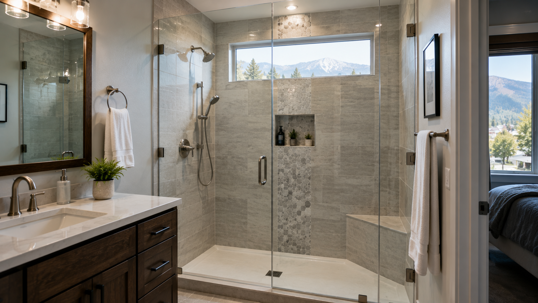
A shower door upgrade is one of those projects that looks simple from the outside and turns out to have more decision points than people expect. I see it constantly with clients in Wheat Ridge, Edgewater, and out toward Golden — someone wants to "just get a new shower door," and then they're standing in a showroom realizing there are five different glass thicknesses, three hardware finishes, and a real cost gap between options that all look similar in a photo.
I've spent a career around building and design, first on construction sites with my dad, then in legal and real estate work, and now running Gatsby Glass of West Denver. Across all of it, the thing that holds up is this: the best decisions come from understanding what you're actually choosing between, not from picking whatever's first on a website.
So here's the real breakdown.
Why Shower Door Choice Matters More in Denver-Area Homes
Front Range homes deal with a specific combination of factors that affect shower glass more than people realize. Hard water is a big one. Denver-metro water leaves mineral deposits on glass and hardware faster than softer water in other parts of the country, which means hardware finish and glass coating decisions actually matter for long-term maintenance, not just appearance.
There's also the altitude and dry climate to consider. Lower humidity means less mold and mildew risk than you'd see in a coastal market, but it also means caulk and silicone can dry out and crack faster if a lower-quality product was used during install. And homes in established neighborhoods like Applewood or parts of Wheat Ridge often have bathrooms that were never built with a modern frameless shower in mind, meaning wall framing and floor pitch sometimes need extra attention during measurement.
Breaking Down the Shower Door Options
Frameless Shower Doors
Frameless is the most requested style right now, and for good reason. It uses thicker tempered glass, typically 3/8 inch or 1/2 inch, with minimal metal hardware. The look is clean and modern, and because there's no metal frame trapping grime, frameless doors are genuinely easier to keep clean over time. The tradeoff is cost — frameless runs higher than other options because of the thicker glass and more precise installation required.
Semi-Frameless Shower Doors
Semi-frameless splits the difference. You get a metal frame around the door panel itself but minimal framing elsewhere, which keeps cost down while still giving a more modern look than a fully framed unit. This is a common choice for homeowners who want the frameless aesthetic without the full price tag.
Framed Shower Doors
Framed doors use thinner glass supported by a full metal frame. They're the most budget-friendly option and still hold up fine for secondary bathrooms, basement bathrooms, or rental properties. The metal framing does create more grout lines where soap scum and hard water deposits can build up, so maintenance is a bit more involved.
Shower Panels and Custom Configurations
Not every bathroom layout fits a standard door. Walk-in showers, corner configurations, and oddly shaped alcoves often need custom glass panels cut to the specific dimensions of the space, sometimes combined with a single swinging or sliding door panel.
What Actually Drives the Cost of a Shower Door
Two quotes for what sounds like the same project can land hundreds of dollars apart, and it's rarely because one company is overcharging. Glass thickness is usually the biggest factor — frameless designs use 3/8 inch or 1/2 inch glass, and the thicker option costs noticeably more both in material and in the extra hardware needed to support its weight properly. Hardware finish matters too. A standard chrome finish is the most affordable, while brushed nickel, matte black, and brass finishes cost more but tend to resist hard water spotting better over time, which matters given how mineral-heavy Front Range water tends to be.
Door configuration changes price as well. A single fixed panel with a swinging door costs less than a multi-panel enclosure with a return panel, simply because there's more glass and more precise fabrication involved. And if your bathroom has any unusual angles, a sloped ceiling, or a niche that needs a custom-cut panel to fit around it, expect a template visit and a bit more lead time before the final fabrication happens.
What to Expect During a Shower Door Project
In-home measurement. Every bathroom has slight variance in wall plumb and floor level, and a real measurement appointment accounts for that instead of guessing from a phone description.
Material and hardware selection. This is where glass thickness, tint (clear versus low-iron), and hardware finish get decided based on your bathroom fixtures and budget.
Fabrication. Custom glass is cut and tempered off-site, generally taking one to two weeks.
Installation. A professional install typically takes half a day to a full day depending on complexity, and should include protecting your existing tile and fixtures.
Final walkthrough. Before the installer leaves, they should walk you through door alignment, hardware care, and what to expect from the silicone cure time.
What Local Expertise Looks Like
A shower door installer who's actually worked across the Denver metro for years knows the specific quirks of older Wheat Ridge and Edgewater bathrooms versus newer construction in places like Golden or further west toward the foothills. They know which hardware finishes hold up against this region's hard water without pitting or clouding within a year. That's not something you can tell from a glossy photo on a website — it comes from having installed hundreds of doors in this specific market and seen what actually lasts.
What Local Expertise Actually Means Day to Day
This isn't an abstract idea. It shows up in specific decisions, like knowing that a particular hardware finish will hold up better against this region's water than another, or recognizing that a 1970s Wheat Ridge ranch home is likely to have a floor pitch that needs extra attention during measurement. It shows up in a fabricator knowing roughly how long a custom order will realistically take based on current shop volume, rather than quoting an optimistic timeline that slips by two weeks. None of this is flashy, but it's the difference between a shower door project that goes smoothly and one that turns into a series of small frustrations.
How to Choose the Right Company for a Shower Door Project
A few things worth asking before you commit: how long has the company been fabricating glass specifically in the Denver metro, not just operating somewhere in Colorado. Do they fabricate the glass themselves or order pre-cut panels from an outside supplier, which affects both turnaround time and their ability to fix a measurement issue quickly. What does their warranty cover, and does it include labor for adjustments down the line, not just a defective panel replacement. These questions tend to separate companies that take the work seriously from ones that are just moving volume.
Seasonal Timing for Shower Door Projects in West Denver
Early summer is a strong window for shower remodels in this region. Days are longer, kids are out of school, and a lot of homeowners use this stretch to knock out bathroom projects before fall brings holiday guests and busier schedules. It's also worth knowing that installers need adequate time for silicone to cure properly, and warmer weather generally helps that process along compared to installing in the dead of winter when bathrooms can run colder and slow the cure.
If you're considering a shower door upgrade before a summer of weekend trips up to the mountains or down to Golden, now is a reasonable time to get a measurement scheduled, since lead times tend to stretch out again once the holiday remodel rush picks up in October and November.
Caring for Shower Glass in a Hard Water Climate
A bit of routine upkeep makes a real difference here. Squeegeeing the glass after every shower takes a few seconds and prevents most of the mineral spotting that hard water causes when it's left to air dry on the surface repeatedly. A weekly wipe with a vinegar-water mix or a dedicated glass cleaner helps prevent that mineral film from etching permanently into the glass, which is far harder to remove once it sets.
Hardware needs occasional attention too. If a door starts feeling stiff or sticky on its track, that's usually mineral buildup in the rollers rather than a sign the hardware is failing outright, and a simple cleaning often resolves it. Letting that buildup go unaddressed for months, though, can wear down the rollers prematurely and lead to an avoidable hardware replacement.
What Older Wheat Ridge and Edgewater Bathrooms Need to Know
A meaningful share of homes in established neighborhoods like Wheat Ridge and Edgewater were built decades before frameless shower doors were standard, which means bathroom layouts and wall framing weren't designed with a heavy glass enclosure in mind. Wall studs may not be positioned where modern hardware brackets expect them, and floor pitch toward the drain can be more pronounced in older construction than current building standards allow.
None of this rules out a frameless upgrade, but it does mean the installer needs to actually account for it rather than installing to a generic spec. Experienced local installers know to check stud placement and floor level carefully in these older homes and will sometimes recommend reinforcement or a slightly different hardware approach to make sure the door operates smoothly for years rather than developing alignment issues within the first year.
How Altitude and Sun Exposure Factor Into Glass Choice
Denver's elevation and intense sun exposure don't get talked about much in shower door conversations, but they're worth knowing about. UV exposure is stronger at altitude, and over many years that can affect certain glass coatings and the silicone sealant used around the enclosure more than it would at sea level. Higher-quality, UV-stable silicone holds up better here than a generic product, and it's a detail worth asking your installer about directly, since it's not something you can evaluate just by looking at the finished install.
Temperature swings between day and night, especially in shoulder seasons, can also be more pronounced here than people expect coming from a milder climate. That swing affects how glass and metal hardware expand and contract slightly over time, which is part of why proper installation technique, not just product quality, plays such a large role in how long a shower enclosure performs without issues.
Frequently Asked Questions About Shower Doors in West Denver
How much does a frameless shower door cost in the Denver area?
Frameless shower doors in the West Denver area typically range from $1,200 to $3,800 depending on glass thickness, hardware finish, and the complexity of the enclosure shape.
How long does it take to install a new shower door?
Once glass is fabricated, installation itself usually takes half a day to a full day, though the full process from measurement to finished install generally spans one to two weeks.
Who installs custom shower doors near me in Wheat Ridge or West Denver?
Several local glass companies serve the West Denver area, including Gatsby Glass of West Denver, which measures, fabricates, and installs custom shower glass for homes throughout Wheat Ridge, Edgewater, and the surrounding metro.
Does hard water affect shower glass and hardware in Denver?
Yes, Denver-metro hard water can leave mineral deposits on glass and hardware faster than in regions with softer water, which makes coating and hardware finish choices more important for long-term maintenance.
Can I replace just the glass panel without replacing the whole shower enclosure?
In many cases yes, if the existing frame or hardware is in good condition, though this depends on whether the original installation used standardized hardware that's still available.
What glass thickness is best for a frameless shower door?
Most frameless shower doors use either 3/8 inch or 1/2 inch tempered glass, with thicker glass offering a more substantial feel and slightly better stability for larger door panels.
How do I know if I need a new door or just new hardware?
If the glass panel itself is undamaged, often a hardware service call, addressing rollers, hinges, or seals, resolves the issue at a fraction of the cost of a full replacement. A quick inspection usually makes the answer clear.
Is frameless glass worth the extra cost compared to framed doors?
For most homeowners staying in their home long-term, yes, largely because frameless designs are easier to keep clean and tend to support resale value better, though framed doors remain a sound, budget-friendly option for secondary bathrooms.
About the Author
Aaron Hochstein owns and operates Gatsby Glass of West Denver. Originally from Minnesota, he moved to Denver in 2003 and has loved everything the city and the surrounding mountains have to offer ever since. He grew up around construction sites with his carpenter father, which gave him an early appreciation for building and design that's never really left him. His professional path took him through law and account management for legal and intellectual property software before he spent over a decade as a licensed real estate agent serving buyers and sellers across the Denver metro. That combination of experience in sales, service, and construction is what eventually led him to open Gatsby Glass of West Denver. Outside of work, Aaron spends his time traveling with his family and taking advantage of everything Colorado offers, from biking and tennis to snowboarding and hiking.
If you're weighing shower door options and want to talk through what actually makes sense for your bathroom, reach out through gatsbyglass.com/west-denver-co.