

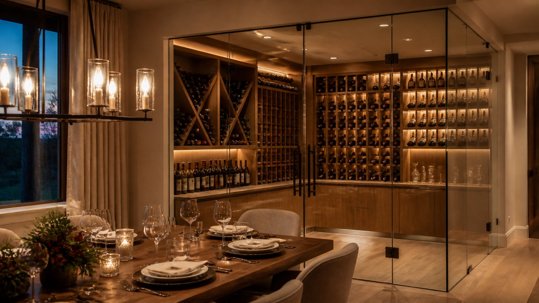
What does it take to build a glass wine room? Four things have to work together. You need a space that can be closed off and cooled, glass walls and a door that hold the cold in and keep condensation off, a cooling system sized for the room, and lighting and shelving that show off the bottles without warming them. Get those four right and a glass wine room in Raleigh, Cary, or Apex becomes the spot guests drift toward every time you host.
I'm Mike Kunzman, owner of Gatsby Glass of South Raleigh. I live in South Raleigh, and I know the Triangle's mix of homes, from classic ranches in Cary to new builds in Fuquay-Varina. With holiday entertaining season here, more homeowners are thinking about where the wine lives when twenty people come over. This guide covers corner displays versus full wine rooms, glass choices, climate control and humidity in our humid North Carolina climate, doors, lighting, and placement, so you can walk into a design conversation knowing what to ask.
What It Takes to Build a Glass Wine Room in Raleigh
A glass wine room is really two projects that have to be planned as one. The first is the enclosure, meaning the glass walls, the door, the hardware, and the way the glass meets your floor, ceiling, and framing. That's the part a glass company designs, fabricates, and installs. The second is the climate control that keeps the room cool and steady through Raleigh's seasonal swings. It has its own needs for power, venting, and drainage, so it gets planned alongside the glass from the start.
These two can't be planned separately. Glass is the biggest heat leak in the room, so the type and amount of glass you choose changes how big the cooling unit needs to be. The cooling unit, in turn, needs a place to vent, a power supply, and sometimes a drain line, which affects where solid walls go and where glass can go. When the glass and the climate control are planned together early, the finished room works better and looks cleaner.
Most projects follow a sequence like this.
- Decide what you want to store and how you want to show it off, which tells you whether a corner display, a compact room, or an entire room fits best.
- Pick the location, keeping sunlight, exterior walls, and access to power and venting in mind.
- Plan the climate control system around the size of the room and the amount of glass you're considering.
- Have the builder frame, insulate, and seal the solid walls and ceiling.
- Have the glass company measure the finished opening, then fabricate and install the glass enclosure.
- Add shelving, racking, and lighting, then let the room settle to temperature before loading bottles.
The order can shift a little for new construction versus a conversion. The constant is that measuring for custom glass happens once the opening is final, because each panel is cut to the exact size of the space it fills.
Corner Displays vs. Full Glass Wine Rooms
The first big decision is scale. Both options put your collection behind glass, but they live very differently in a house.
The Corner Display
The smallest version turns a corner of a room into a glass-fronted display. Picture a dining room corner or the end of a kitchen where the racking sits behind glass. You see every bottle, but you don't walk inside. It's a strong fit where floor space is tight, like a townhome in Garner or a downtown Raleigh condo, and for collectors who want display first and long-term aging second.
Some corner displays are display only and sit at room temperature, which is fine for bottles you plan to open in the next few months. Others are fully cooled and sealed. Be clear about which one you want before design starts, since a cooled display needs a tighter seal and more careful glass selection.
The Full Wine Room
A dedicated wine room is what most people picture. It's an enclosed space you can step into, with racking on one or more walls and glass on at least one side so it's visible from the rest of the house. It might be a converted closet, a corner of a finished basement, or a dedicated room off the dining area. An entire room gives you more storage, more design freedom, and a real sense of arrival when you open the door to pull a bottle during a party.
The trade-off is complexity. A walk-in needs a properly insulated and sealed shell, a cooling system sized for that volume, and more glass, which means more planning around heat gain and condensation.
Compact Options for Smaller Spaces
You don't need a spare room to do this. The space under a staircase, an unused hall closet, or a nook beside the bar can become a compact wine room. Our glass wine rooms and enclosures page covers custom designs for a single corner, a compact room, or an entire room, so the size of your house doesn't have to limit the idea.
How Glass Choice Affects a Wine Room
Glass is beautiful, but it doesn't insulate the way a framed and insulated wall does. Every square foot of glass between a cool wine room and a warm living room is a place where heat moves in. That's why glass selection is one of the most important conversations in the whole project.
In general, insulated glass is one common way to slow that heat flow. According to the U.S. Department of Energy, insulated glazing uses two or more panes of glass sealed around a gap, often filled with argon gas, and low-emissivity coatings on the glass help control heat transfer. The same guidance notes that warm-edge spacers between the panes help reduce condensation at the edges. Those are the principles behind a good window, applied to an interior wall. Glass options vary by project, so ask during your design consultation which ones fit your room.
There's a design trade-off to understand. Insulated glass units are thicker and need sealed edges, so they usually sit in some kind of frame or channel. A single heavy panel of tempered glass can give you a cleaner, more frameless look, but it lets more heat through. The right choice depends on how much glass you want, how cold you plan to keep the room, how warm the surrounding space runs, and how hard you want the cooling unit working.
A few questions worth asking during design.
- How much of the room will be glass, and on which sides?
- Will the glass face a conditioned living space or an area that gets warm, like a sunny great room?
- Do you want a frameless, lightly framed, or fully framed look?
- Is the climate control system being sized with the glass plan in mind?
Cooling and Humidity in North Carolina's Humid Climate
The NOAA State Climate Summary for North Carolina describes the state as having a humid climate with very warm summers and moderately cold winters, and notes that most of North Carolina experiences hot and humid summers. Anyone who has walked a Raleigh greenway in July knows exactly what that means.
Humidity matters for a wine room in two ways. The first is the bottles themselves. Our wine room service page lists general guidance of 45°F to 65°F for storage, with 55°F being ideal for long-term aging, and humidity kept between 50% and 70%. Holding those numbers steady through a muggy Raleigh summer and a dry heated winter takes a system built for it.
The second is condensation on the glass. When warm, humid air touches a surface colder than its dew point, water forms on that surface. In a wine room, the cold side of the glass is inside and the warm, humid side is your living space. If the outside face of the glass gets too cold, or the house air is especially muggy, you can get fogging or beads of water on the glass. Better glass, a well-sealed door, and steady humidity control in the rest of the house all help.
Planning the Climate Control
We design our glass wine rooms around climate control, so your collection can stay in a stable environment through Raleigh's hot summers and dry heated winters. A standard home air conditioner isn't designed to hold a small room in the mid-50s with controlled humidity, so most wine rooms use a dedicated system with its own ducting, venting, wiring, and condensate drain. We'll talk through the climate control plan for your room during your design consultation.
Common approaches include self-contained units that vent through a wall, ducted systems that put the noisy parts somewhere else in the house, and split systems with an evaporator inside the room and a condenser elsewhere. Each has its own needs for space, venting, and noise. The system also depends on the insulation and vapor barrier in the solid walls and ceiling, which your builder usually handles. Planning the glass layout and the unit's location and vent needs together keeps one from being designed around the other.
Choosing the Right Door for a Glass Wine Room
The door gets opened more than any other part of the room, especially during a holiday party when someone is always heading in for another bottle. It needs to seal well, swing smoothly, and look like it belongs with the rest of the glass.
Safety comes first. The federal safety glazing standard for architectural glazing (16 CFR Part 1201) covers glass used in doors, along with products like sliding glass doors and shower doors, because broken glass in those spots can cause serious injury. A glass wine room door should use safety glazing, and it's fair to ask your installer to confirm what's going into the door.
Beyond safety, a few door details shape how well the room performs.
- Seals and gaskets. A cooled room needs a door that closes tight on all sides, including the bottom. Gaps let cold air spill out and warm, humid air drift in.
- Swing direction. A door that swings out into a busy dining room or hallway can get in the way when guests are around.
- Hardware finish. Matching the hinge and pull finish to your kitchen or bar hardware ties the room together, so ask which finishes are available for your wine room.
- Glass match. The door glass usually matches the walls so the room reads as one clean surface. If you want privacy some of the time, our wine room page notes that smart glass lets you control the opacity of the glass walls and helps shield wine from UV rays.
Lighting That Shows Off the Collection
Lighting turns a storage space into a showpiece, but the wrong fixtures can quietly work against the cooling system. According to the U.S. Department of Energy's guidance on LED lighting, LEDs emit very little heat, while incandescent bulbs release 90% of their energy as heat. Inside a small, cooled room, that difference adds up, which is why LED strips and fixtures are the usual choice.
- LED strips tucked into the front edge of shelving, so the light washes across the labels.
- Backlighting behind a feature wall of bottles, which glows nicely through clear glass from the dining room.
- Dimmable lighting on its own switch, turned up for a party and down for a quiet dinner.
- Warm color temperatures that flatter wood racking and dark bottles.
Natural light is a different story. Direct sunlight warms the room and isn't good for wine, so avoid placing the glass where afternoon sun will hit it. Our wine room page lists custom shelving and lighting among the options for personalizing a wine room, so plan them at the same time as the glass.
Where to Put a Wine Room in Cary and Apex Homes
Placement affects cost, performance, and how much you'll actually enjoy the room. Homes around here vary a lot, from established brick ranches in Cary to newer two-story builds in Apex and Holly Springs and open floor plans out toward Fuquay-Varina. Each has natural spots that work better than others.
Near the Dining Room or Kitchen
This is the most popular choice for people who entertain. A glass wine corner or compact room beside the dining room puts the collection on display right where guests gather, and it keeps trips short when you're pouring for a crowd.
Under the Stairs
Many two-story homes in Apex and Cary have an open area beneath the staircase that's hard to use well. Enclosing it in glass turns dead space into a feature. If your stairs have or will have glass, our custom glass railings can carry the same clean look from the staircase down to the wine room below.
Basements and Bonus Rooms
Where a home has a basement, it's often the easiest place to keep a room cool, since it stays more stable than upper floors. Bonus rooms over garages are a tougher fit, because they tend to run warm in summer.
Whatever the spot, steer clear of exterior walls that take direct afternoon sun, spaces next to ovens, fireplaces, or laundry rooms, and any area with no realistic path for the cooling unit to vent. If you're in Cary and weighing options, our Cary service area page shows the range of glass work we do for homes in town.
Planning Around Holiday Entertaining Season
The holidays are when a wine room earns its keep. It's where the good bottles come out for Thanksgiving, where guests gather during a December open house, and where you pull something special at New Year's.
Be realistic about timing. A custom glass wine room depends on the framing, insulation, power, and cooling being ready first, and the glass is fabricated to fit the finished opening. If you're starting from scratch in November, the room may not be done before your holiday guests arrive. That's okay. The season is a great time to plan, because you're actively hosting and can see where people gather and where a wine room would get the most use.
- Notice where guests congregate during your gatherings.
- Count how many bottles you store now and how many you'd like to keep on hand.
- Save photos of glass wine rooms you like, including glass, door, and lighting styles.
- Schedule a design consultation so the glass plan and the cooling plan come together early.
How to Choose a Glass Company for Your Wine Room
A wine room is custom from top to bottom, so the company you choose for the glass matters. Here's what to look for, whoever you hire.
- A real design process. You should see what the room will look like before anything is fabricated. Gatsby Glass of South Raleigh offers digital renderings so you can picture your project before installation begins, plus a virtual showroom for browsing ideas.
- Honest scope. A good glass company will tell you clearly what they handle and what your builder or other trades handle.
- Precise measuring. Custom glass is cut to fit, so measuring the finished opening carefully is essential.
- Convenient consultations. We offer in-home consultations, so you can talk through the project in the space where the wine room will go.
For more on how custom glass fits local homes, see our post on why custom glass is a smart choice for Cary homeowners.
Frequently Asked Questions About Glass Wine Rooms
Does a glass wine room in Raleigh need its own cooling system?
If you want to age wine long term, yes. A standard home air conditioner isn't built to hold a small room at cellar temperature with controlled humidity. A dedicated climate control system sized for the room and its glass is the usual approach, and we'll go over it with you during your design consultation. A display-only corner for bottles you'll open soon can sometimes sit at room temperature.
Why does the glass on my wine room fog up?
Fogging happens when warm, humid air on the living side meets glass that's colder than the air's dew point. North Carolina's humid summers make it more likely. The right glass choice, a tight door seal, and good humidity control in the house all help.
What size can a glass wine room be?
It can be as small as a glass-fronted corner or a compact room under the stairs, or as large as an entire room. Corner displays suit smaller homes and display-focused collections, while a full room offers more storage and design freedom.
Can I build a glass wine room under my stairs?
Often, yes. Under-stair spaces are a popular spot for compact glass wine rooms in two-story homes around Cary, Apex, and Holly Springs. The main questions are whether there's room for racking and whether the cooling unit has a realistic place to vent.
Do I need a permit for a wine room?
It depends on the work involved. Permits may be required for electrical and structural changes, so check with your contractor and your local permitting office in Raleigh, Cary, Apex, or wherever you live before construction starts.
Book a Free Design Consultation in South Raleigh
If you're picturing a glass wine corner off the dining room or a compact wine room under the stairs, let's talk it through before your next round of holiday hosting. Gatsby Glass of South Raleigh serves homeowners across Raleigh, Cary, Apex, Garner, Holly Springs, and Fuquay-Varina, and we'll help you plan the glass around your space, your collection, and your climate control. Schedule your free design consultation with Gatsby Glass of South Raleigh and see your wine room in a digital rendering before a single panel is cut.