

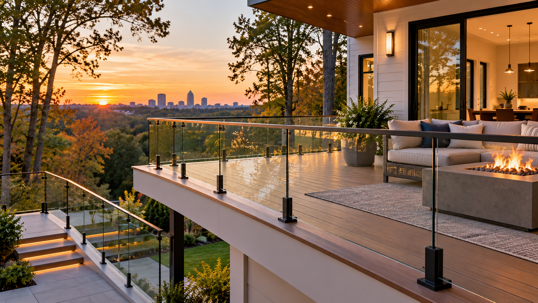
Yes, glass railings are a very good choice for most stairs and decks, as long as they are built with true safety glass, anchored to a solid structure, and designed to meet North Carolina's guard requirements. That is the short answer I give homeowners who ask about glass railings in Raleigh, and it is the question I hear more than any other once the weather cools off and people start spending their evenings outside again.
October is one of the best months of the year to be on a deck in the Triangle. The heavy summer air finally breaks, the leaves start turning along the greenways, and the porch light stays on a little later. It is also when a lot of homeowners take a hard look at the railing they have been staring through all summer and wonder whether there is a better option. In this guide I will walk through how glass railings work on interior stairs, lofts, decks, and balconies, what the building code expects, how glass holds up in our climate, what cleaning really looks like, and how to plan a project so it goes smoothly from the first measurement to the final inspection.
My name is Mike Kunzman, and I own Gatsby Glass of South Raleigh. I live here too, so I see the same humid summers, pollen storms, and beautiful falls that you do. Everything below comes from that local point of view.
Are Glass Railings a Good Choice for Stairs and Decks?
For the right project, glass railings solve problems that wood and metal railings simply cannot. The biggest one is the view. A traditional railing puts a row of balusters between you and your yard, your pond, or the tree line behind your house. Glass removes that visual clutter. You still have a full-height barrier, but your eye travels straight through it.
The second advantage is light. On an interior staircase, a solid half wall or a dense row of spindles can make a stairwell feel dark and closed off. Glass panels let daylight move from one level to the next, which can make a modest entry or a narrow stair feel noticeably larger. That matters in a lot of Triangle homes, where open floor plans and two-story foyers are common in newer neighborhoods.
The third advantage is maintenance. A wood deck railing in central North Carolina needs regular sealing or staining to hold up against sun and moisture, and painted metal eventually chips and needs touch-ups. Glass does not rot, warp, or need refinishing. It does need cleaning, which I will cover honestly later, but the long-term upkeep is very different from wood.
Glass railings are not the right fit for every situation. If your main goal is privacy from a neighbor's deck, clear glass works against you, although frosted or textured glass can help. If your budget is tight and the railing will be hidden behind furniture or planters, the advantages of glass may not justify the cost. A good glass company should tell you that up front rather than talk you into something you do not need.
Interior Stair and Loft Railings Compared With Exterior Deck Railings
People often talk about glass railings as one product, but indoor and outdoor installations are really two different jobs. The glass may look similar, but the conditions, mounting methods, and design priorities change.
Interior stairs, lofts, and landings
Inside the house, the railing is usually part of the architecture. It sits next to your flooring, your trim, and your stair treads, so the details are front and center. Homeowners tend to care most about how the glass meets the stairs, what the hardware finish looks like, and whether the top rail matches the rest of the home.
Interior railings also protect people in tight, busy spaces. A loft overlooking a family room or a second-floor landing above a foyer gets a lot of daily traffic. Kids run past it, laundry baskets bump it, and pets lean against it. The glass and the mounting have to handle that everyday contact without flexing or rattling.
The good news is that interior glass is protected from weather. There is no rain, no direct summer sun beating on the hardware, and no pollen settling on it every spring. That gives you a little more freedom in hardware choices and makes cleaning simpler.
Exterior decks, porches, and balconies
Outside, the railing is exposed to everything central North Carolina can throw at it. That includes long humid summers, afternoon thunderstorms, heavy spring pollen, the occasional remnants of a tropical system, and temperature swings from summer heat to winter frost. Hardware has to resist corrosion, drainage has to be considered so water does not sit in channels, and the structure underneath has to be solid enough to carry the load.
That last point is critical. A glass railing is only as strong as what it is attached to. Before we design an exterior railing, we look closely at the deck framing, the rim joist, and the posts or fascia where the system will mount. If the existing deck has soft spots or loose framing, that needs to be addressed first, often by a deck builder or carpenter, before glass goes on.
Exterior railings are also where the view really pays off. Many homes around South Raleigh back up to wooded lots, creeks, or open green space. Homes near Lake Wheeler Park and Historic Yates Mill County Park are good examples of properties where the scenery is the whole reason the deck exists. A glass railing lets you enjoy that scenery from a chair instead of only when you stand at the edge.
Framed Glass Railings Compared With Frameless Systems
Once you decide glass is the right material, the next big decision is how much metal you want to see. Most systems fall somewhere on a spectrum between fully framed and fully frameless.
Framed and post-supported systems
In a framed or post-supported system, the glass panels sit between metal posts, often with a top rail and sometimes a bottom rail. The posts carry much of the load, and the glass serves as the infill between them. This approach is common on decks because it works well with existing framing and is often more budget friendly.
Framed systems still give you a far more open view than balusters, and the posts can be finished to match other exterior details such as light fixtures, door hardware, or window trim. For a lot of Raleigh homeowners, this is the sweet spot between appearance and cost.
Frameless and minimal-post systems
Frameless systems remove the vertical posts and hold the glass along the bottom edge, usually with a continuous base shoe or individual standoff clamps. The result is an almost uninterrupted wall of glass. You see the view, a thin line of hardware at the base, and often a slim cap or handrail along the top.
Frameless designs are popular on modern homes, interior lofts, and staircases where the railing is meant to be a design feature. They usually require thicker glass and more careful engineering of the base, because the glass itself carries more of the load. They also depend heavily on what they are anchored to, which is another reason a site visit matters before anyone gives you a firm recommendation.
Top rails and handrails
Even on frameless systems, many homeowners choose a top cap or a separate handrail. On stairs, a graspable handrail is often required, and it gives people something to hold onto as they climb. On decks, a top cap gives you a place to rest a drink and adds a finished look. Leaving the top edge completely bare can look striking, but it is not right for every space, especially in homes with young children or older family members.
What North Carolina Code Expects From a Railing
Every railing, glass or not, has to meet the building code. The code calls these barriers "guards," and their job is to keep people from falling off a raised surface. Here are the basics homeowners should understand before planning a glass railing project in Raleigh.
According to the City of Raleigh's deck construction guide, a deck whose walking surface is 30 inches or more above the ground needs to be surrounded by guards at least 36 inches tall. The same guide notes that stair guards and handrails sit in a range of 34 to 38 inches, that the top rail and posts need to support a 200 pound load, and that infill has its own load requirement. It also reminds homeowners to get a building permit before the work begins.
The North Carolina Office of the State Fire Marshal has issued code interpretations that repeat the 36 inch minimum guard height and explain the purpose behind the rules. The guard keeps people and large objects from falling, while the limits on openings keep small children and small objects from slipping through. Guards also have to resist a concentrated 200 pound load applied in any direction along the rail.
What does that mean for glass? A few practical things.
The glass has to be safety glass, typically tempered or laminated, and thick enough for the span and mounting method.
The finished height has to meet the guard requirement measured from the walking surface, not from the ground below.
Gaps between panels, below the glass, and at the ends of a run still count as openings, so they have to be kept within the code limits.
The mounting hardware and the structure it attaches to have to carry the required loads, not just the glass itself.
Stairs have their own rules for handrail height and graspability, which often affects the top rail design.
Codes are updated over time, and individual towns in Wake and Johnston counties handle permits and inspections through their own offices. Before any project, confirm the current requirements with your local permit office. A professional installer should be comfortable discussing these requirements in plain language and building a system that passes inspection.
Understanding Safety Glass for Railings
The word "glass" makes some people nervous when it comes to a railing, which is understandable. Nobody wants to picture a pane shattering on a crowded deck. That is exactly why railing glass is a completely different product from the glass in an old picture frame.
Tempered glass is heat treated so it is much stronger than ordinary glass, and if it does break, it crumbles into small, relatively blunt pieces rather than long sharp shards. Laminated glass is made of two or more layers bonded together with a tough interlayer. If a laminated panel cracks, the interlayer holds the pieces in place, so the panel stays in the opening instead of falling out. Many railing systems use tempered laminated glass, which combines both benefits.
Our glass railing systems use laminated safety glass, which is especially valuable on raised decks and lofts where keeping the barrier in place matters most. Thickness, panel size, and mounting style all work together, so the right glass for a short interior landing is not necessarily the right glass for a long, high deck run.
Clear, frosted, and tinted options
Clear glass is the most popular choice because it maximizes the view. Frosted or textured glass is a good option where you want light without full visibility, such as a deck that faces a neighbor or an interior railing beside a private space. Some homeowners also choose low-iron glass, which reduces the slight green tint you can see on the edges of standard glass. Seeing samples in person helps a lot with these decisions.
How Glass Railings Hold Up in the Raleigh Climate
Central North Carolina is generally kind to glass, but the climate does shape how a railing should be designed and maintained.
Summer humidity and frequent thunderstorms mean exterior hardware needs to resist corrosion. Stainless steel and quality powder-coated aluminum are common choices because they stand up to moisture far better than bare or lightly coated metal. Base channels also need a way to shed water so it does not collect and leave mineral deposits or encourage corrosion at the bottom of the glass.
Fall is a different story. The North Carolina State Climate Office has pointed out that humidity levels are typically lower at this time of year, and several recent autumns in the state have run unusually dry. For homeowners, that means October and November tend to offer comfortable, dry stretches that are ideal for outdoor projects and for actually enjoying the deck afterward.
Spring brings the one challenge everyone in the Triangle knows well, which is pollen. That yellow film settles on cars, porches, and yes, glass railings. It does not hurt the glass, but it is visible, especially on clear panels in direct sun. I will be honest about that, because it is the most common surprise for new glass railing owners.
Winter is usually mild here, but freezing nights and occasional ice do happen. Glass itself handles these temperature swings well when it is installed with the proper clearances and gaskets that allow for expansion and contraction. That is one more detail a careful installer handles during design.
Cleaning and Caring for Glass Railings
Glass railings are low maintenance, but they are not no maintenance. The trade-off for an open view is that you will see dust, pollen, water spots, and the occasional handprint. Here is what upkeep realistically looks like.
For routine cleaning, a soft cloth or squeegee with a non-abrasive glass cleaner or mild soapy water is all most panels need.
During pollen season, a gentle rinse with a garden hose followed by a squeegee is often faster than spraying and wiping panel by panel.
Avoid abrasive pads, razor blades, and harsh chemicals that can scratch the glass or damage hardware finishes.
Wipe down metal hardware occasionally and check that base channels drain freely, especially after leaf fall.
Look over gaskets, caps, and fasteners once or twice a year and call your installer if anything looks loose.
A protective coating can make a real difference. We offer Ultra Ice Pro, a treatment that helps repel stains and buildup so water and grime have a harder time sticking to the surface. On exterior railings that see rain, sprinklers, and pollen, that can cut down noticeably on how often you reach for the squeegee.
Most homeowners find that a quick cleaning every few weeks in spring and summer, and less often in fall and winter, keeps the glass looking sharp. Compared to sanding and staining a wood railing every few years, that is a trade most people are happy to make.
Working With Builders and Planning New Construction
A lot of glass railing projects in our area happen on new homes. Holly Springs, Fuquay-Varina, Apex, and the growing communities south of Raleigh have seen steady new construction, and many buyers want modern finishes from the start rather than replacing a builder-grade railing later.
If you are building, the best time to plan a glass railing is before the stairs and deck are finished. That allows the builder to add blocking inside walls, plan the right fascia or rim board for side-mounted systems, and coordinate stair tread and nosing details with the railing design. Retrofitting is absolutely possible, but planning ahead usually means cleaner details and fewer surprises.
Good coordination looks like this. The homeowner chooses a style early. The builder and glass company talk through mounting locations and structural support. Final measurements happen after the stairs or deck framing are complete, because glass is fabricated to exact sizes and cannot be trimmed on site. Then installation is scheduled once the surrounding finishes are far enough along that the glass will not be damaged by other trades.
For existing homes, the process is similar. We look at the current railing, the structure behind it, and how you use the space. A classic ranch in Cary with a back deck, a two-story home in Garner with an open foyer, and a downtown condo with a balcony all call for different solutions, and part of the job is matching the system to the house.
Choosing a Glass Railing Company in the Triangle
A glass railing is a safety product and a design feature at the same time, so the company you choose matters. Here are the things I would want to know if I were hiring someone for my own home.
Do they visit the site and look at the structure the railing will attach to, or do they quote from a photo alone?
Can they explain the guard height, opening limits, and load requirements in plain language?
What type and thickness of glass do they recommend, and why?
What hardware materials do they use for exterior work in a humid climate?
Will they pull permits when required and coordinate with inspections?
Can they show you examples of completed railing projects?
Do they offer design help, such as renderings, so you can see the result before committing?
At Gatsby Glass of South Raleigh, we offer in-home and virtual estimates, and we can provide digital renderings so you can picture the finished railing in your own space. You can browse finished projects in our inspiration gallery to get a feel for framed, frameless, interior, and exterior styles. If you are thinking about opening up more of your home, our glass walls and partitions pair well with a glass stair railing to carry the same open look through an entry or office.
You can learn more about the systems we install on our custom glass railings page, including deck, balcony, stair, and pool glass options.
Why Fall Is a Smart Time to Plan Your Glass Railing Project
Many homeowners wait until spring to think about outdoor upgrades, but fall has some real advantages. You are using your deck right now, so it is easy to see exactly what you want to change. Where does the railing block your view? Which corner gets the most sun? Where do people actually stand and sit when you have friends over?
Fall planning also sets you up well for the following year. Glass is custom fabricated after final measurements, so it takes some time from consultation to installation. Starting the conversation in October gives you time to compare options, work through design choices, and get on the schedule without rushing.
Interior projects are also a natural fit for fall and early winter. If you plan to host family over the holidays, a new glass stair or loft railing can change how your entry feels when guests walk through the door. Planning now gives you the best chance of having it finished on your timeline.
Frequently Asked Questions About Glass Railings in Raleigh
Are glass railings safe for homes with kids and pets?
Yes, when they are built with safety glass, mounted to solid structure, and designed to meet guard requirements. Glass panels also eliminate the gaps between balusters that small children sometimes try to climb or squeeze through. Keep any gaps between panels and at the base within code limits, and consider a top rail for extra peace of mind.
Do I need a permit for a glass deck railing in Raleigh?
Deck work in Raleigh generally requires a building permit, and the City of Raleigh's deck guide recommends getting one before construction begins. Requirements can differ in Cary, Apex, Garner, and other nearby towns, so check with your local permit office or ask your installer to confirm.
How tall does a glass railing need to be on a deck?
For a residential deck more than 30 inches above the ground, North Carolina guidance calls for guards at least 36 inches tall, measured from the deck surface. Stairs have their own range for handrails and guards. Your installer should confirm current requirements for your specific project.
Will glass railings hold up to Raleigh weather?
Quality safety glass and corrosion-resistant hardware handle humidity, storms, and winter cold well. The bigger day-to-day factor is cleaning, especially during spring pollen season. A protective coating such as Ultra Ice Pro can help keep panels clearer between cleanings.
Can I add glass railings to my existing deck or staircase?
Often, yes. The key is whether the existing structure can support the system. A site visit will show whether the framing, rim joist, or stair stringers are ready for glass or need work first.
How do I clean glass railings without scratching them?
Use a soft cloth or squeegee with a non-abrasive glass cleaner or mild soapy water. Rinse heavy pollen off with a hose before wiping. Avoid scouring pads, razor blades, and harsh chemicals.
Let's Talk About Your Railing
If you are tired of looking through balusters at your own backyard, or your staircase feels darker and more closed in than it should, a glass railing may be the upgrade that changes how the whole space feels. We help homeowners across Raleigh, Cary, Apex, Garner, Holly Springs, Fuquay-Varina, and Clayton design railings that are safe, code compliant, and built for our climate. Contact Gatsby Glass of South Raleigh to schedule a design consultation, or call (984) 266-3831, and let's figure out the right glass railing for your home.